Stressed cattle are harder to handle, more likely to get hurt — and more likely to hurt someone. Whether you’re vaccinating, branding, sorting, or running cattle through a chute for routine health checks, reducing stress isn’t just about animal welfare. It affects weight gain, conception rates, meat quality, and the safety of everyone working the pen. Here’s what actually makes a difference, based on how cattle think and move.
Understand How Cattle See and React
Cattle have wide-angle, panoramic vision, but poor depth perception and a blind spot directly behind them. That means sudden movement from behind, shadows, high-contrast lighting, or anything flapping or reflecting can spook an animal that looks calm one second and is fighting the chute the next. Understanding this alone changes how you should think about facility layout, lighting, and where you stand while working cattle.
Work the Flight Zone, Not Against It
Every animal has a flight zone — an invisible bubble of personal space that, when a handler enters it, triggers the animal to move away. Step just inside the edge of that zone at the right angle, and cattle move calmly in the direction you want. Push too deep into it, chase, or corner an animal, and you get panic, spinning, or attempts to escape. Learning to read and work the edge of the flight zone is one of the single biggest factors in calm, low-stress handling.
Facility Design Matters More Than People Think
Curved Alleys and Tubs
Curved alleys and tubs work with cattle’s natural tendency to circle back toward where they came from, keeping them moving forward instead of balking at a straight line into the unknown. A well-designed curve keeps the animal ahead from disappearing out of sight, which reduces hesitation at the front of the line.
Solid Sides on Alleys and Tubs
Solid sides block outside distractions — people walking by, vehicles, dogs, shadows moving through gaps — that can cause cattle to stop, balk, or try to turn back. Open-sided equipment might seem fine until the day a distraction on the wrong side stalls your whole herd mid-process.
Non-Slip Flooring
An animal that slips even once in a chute or alley becomes noticeably harder to move through it again. Solid footing — whether ribbed steel or rubber flooring — keeps cattle confident and willing to keep moving forward.
Consistent Lighting
Cattle balk at shadows and bright contrasts, especially where a dark alley opens into bright sunlight or vice versa. Where possible, even out lighting along the path from pen to chute so animals aren’t hesitating at every light change.
Equipment Choices That Reduce Stress
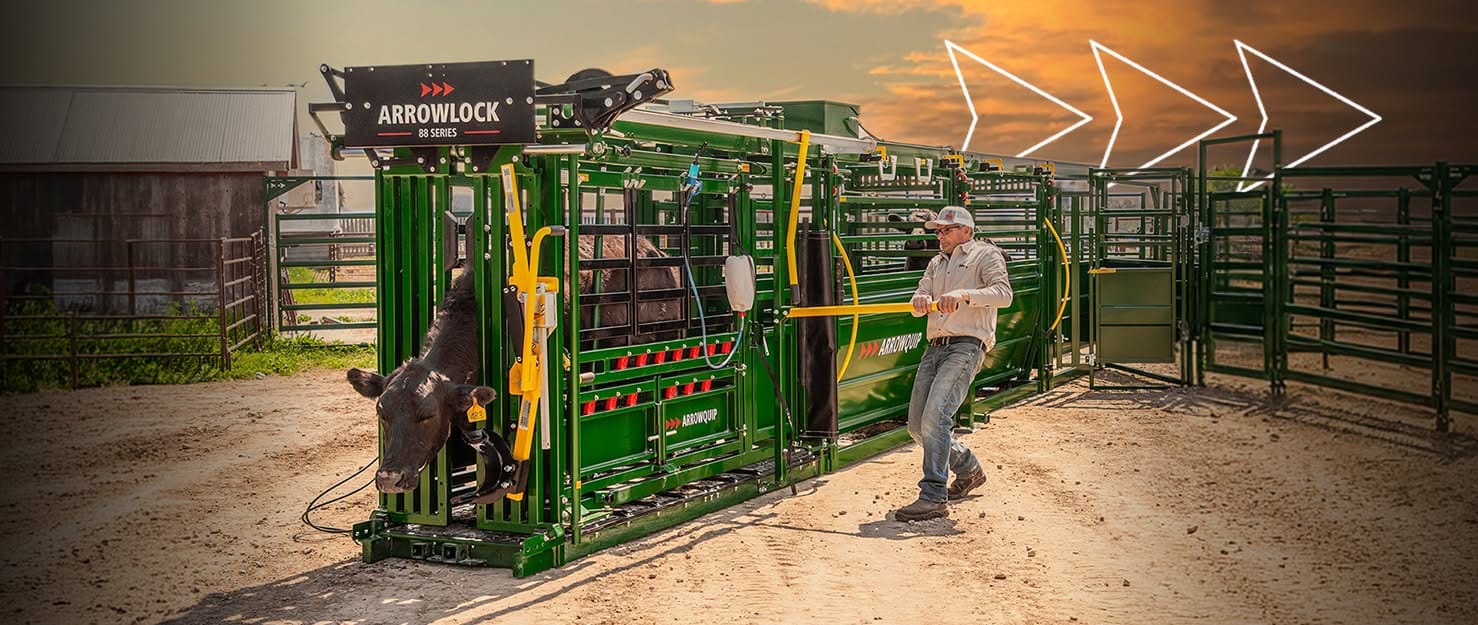
- A chute with a smooth, controlled headgate — a headgate that catches firmly but doesn’t slam reduces the panic response that comes with a loud, jarring capture
- A squeeze mechanism that applies pressure gradually — sudden, forceful squeezing increases struggle; smooth, adjustable pressure calms animals faster
- Solid, non-rattling construction — loose panels, clanging gates, and rattling metal add unnecessary noise stress to an already tense moment
- A chute sized correctly for your cattle — equipment that’s too large lets animals turn or thrash; equipment that’s too small increases physical stress and injury risk
Handler Behavior: The Most Underrated Factor
Even the best-designed facility and equipment can’t overcome poor handling technique. Move slowly and predictably. Keep voices low — yelling and loud noises are one of the fastest ways to spike stress hormones in cattle. Avoid unnecessary use of hot shots or excessive force; in most cases, patience and proper flight-zone positioning move cattle just as effectively, with far less stress and far less risk of injury to the animal or the handler.
Frequently Asked Questions
Why does reducing cattle stress during handling matter?
Stressed cattle are more difficult and dangerous to handle, and stress has been linked to lower weight gain, reduced conception rates, and poorer meat quality, making low-stress handling both a safety issue and a production issue.
What is a cattle’s flight zone?
The flight zone is the invisible personal space around an animal that, when entered by a handler, triggers it to move away. Understanding and working the edge of this zone, rather than deep inside it, allows handlers to move cattle calmly instead of causing them to bolt.
Do curved alleys really reduce cattle stress?
Yes. Curved alleys and tubs work with cattle’s natural tendency to circle back toward where they came from, keeping animals moving forward calmly instead of balking at what looks like a dead end or unfamiliar straight path.
Does the type of cattle chute affect animal stress levels?
Yes. A chute with a smooth, controlled headgate and squeeze mechanism, solid footing, and minimal noise reduces the chance of an animal panicking, compared to equipment that slams, rattles, or requires repeated forceful adjustments.
How does handler behavior affect cattle stress?
Calm, predictable movement, quiet voices, and working the edge of the flight zone rather than chasing or yelling at cattle significantly reduce stress and make animals easier and safer to move through a facility.
Upgrade Your Facility for Lower-Stress Handling
The right chute, alley, and tub setup makes low-stress handling far easier to achieve — day in, day out. Contact Riverland Farm & Ranch Equipment to talk through equipment built for calmer, safer cattle handling, proudly serving Wisconsin and cattle producers across the United States.